How to Pull a Perfect Espresso Shot at Home
Concentrated, syrupy, and the base of every latte and cappuccino. Learn to dial in a balanced shot.
Updated June 1, 2026
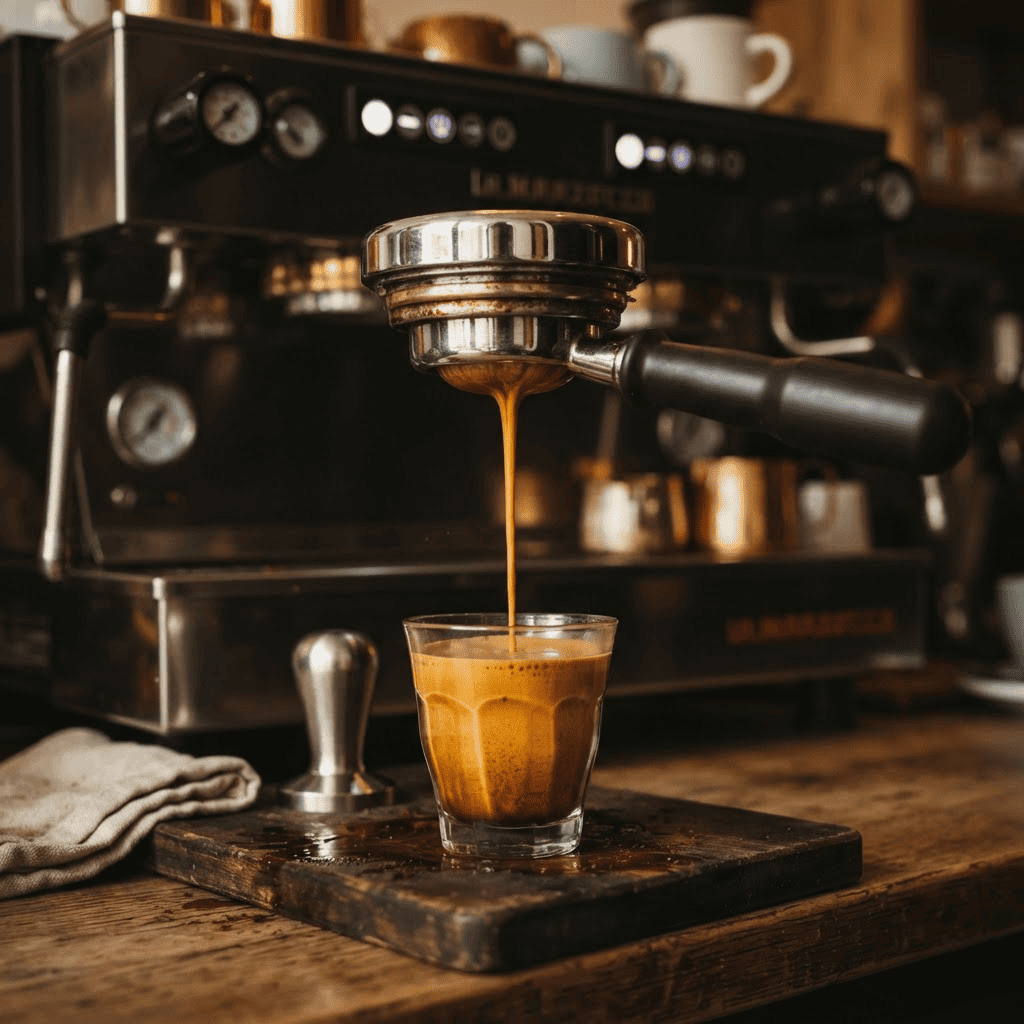
- Brew time
- 25–30 sec
- Ratio
- 1:2 (18 g in, 36 g out)
- Grind
- Fine
- Difficulty
- Advanced
Espresso forces hot water through finely-ground, compacted coffee at around 9 bars of pressure in 25–30 seconds, producing a concentrated, syrupy shot layered with crema. It is the most demanding brew method — tiny grind changes have outsized effects — but once you understand the brew ratio as your guiding variable, dialing in any espresso becomes a logical, repeatable process rather than guesswork.
Understanding the espresso brew ratio
Modern espresso is defined by the relationship between your dry coffee dose and the liquid yield in your cup. A standard "normale" is 1:2 — for example, 18 g of coffee in produces 36 g of liquid espresso out. Ristretto shots run shorter (1:1 to 1:1.5) for a sweeter, more viscous result. Lungo shots run longer (1:3 or more) for a lighter, more tea-like extraction. Brew ratio, not shot time, is the number to lock in first.
Step-by-step espresso dial-in
- 1Set your grinder to fine and purge it with a few grams of coffee to clear old grounds.
- 2Dose 18 g of coffee into a clean, dry portafilter basket. Use a distribution tool or tap to level the grounds.
- 3Tamp straight down with firm, even pressure — about 15–20 kg. Consistency matters more than force.
- 4Rinse (flush) the group head for 2–3 seconds to clear residual grounds and stabilize temperature.
- 5Lock the portafilter in and start your shot and scale simultaneously.
- 6Stop extraction at 36 g of yield. Note the total time.
- 7Taste before adjusting. Sour and under 25 seconds: grind finer. Bitter and over 35 seconds: grind coarser.
Pro tip: Keep a shot log: grind setting, dose, yield, time, and tasting notes. One variable per adjustment. Your grinder may need several iterations to settle into a new setting — do not chase a single shot.
What the crema tells you
Crema forms when CO₂ dissolves into the espresso under pressure and releases on the way out. A thick, tiger-striped crema is a sign of fresh beans and good extraction. Very pale crema suggests old, stale beans or under-extraction. Very dark crema that disappears quickly can indicate over-extraction or too-fresh beans (under 4 days off roast). Crema is a clue, not the goal — taste always wins.
Common espresso problems and fixes
- Shot runs fast (under 20 s, thin yield): grind finer, check tamp evenness, ensure dose is correct.
- Shot runs slow (over 40 s, choked): grind coarser, check for clumps in the puck, try a lower dose.
- Bitter, harsh finish: over-extracted — grind coarser or reduce yield ratio.
- Sour, hollow, thin body: under-extracted — grind finer or increase yield slightly.
- Channeling (pale streaks in crema): uneven distribution or tamp. Slow down puck prep.
- Watery, weak shot: dose is too low or grind is too coarse for the machine.
Frequently asked questions
How long should a perfect espresso shot take?
A standard double shot (18 g in, 36 g out) should take about 25–30 seconds to pull, not counting any pre-infusion. Use time as a diagnostic tool, but always let taste be the final decision. Some coffees taste best at 28 seconds, others at 35.
Do I need a special grinder for espresso?
Yes — this is the most important gear decision for home espresso. Espresso requires a fine, highly consistent grind with small, precise adjustment steps. A dedicated espresso burr grinder with stepless or micro-stepped adjustment makes dialing in far easier. A drip coffee grinder simply cannot resolve the fine adjustments espresso requires.
What is the best espresso dose?
Most home espresso baskets are designed for 14–18 g for a double shot. Weigh your basket capacity and fill to within a gram. The dose is set by your basket; the ratio is set by how long you run the shot.
Why does my espresso taste sour?
Sourness in espresso means under-extraction — water passed through the puck too quickly or the grounds were too coarse to extract properly. Grind finer by one or two clicks and pull the shot again.